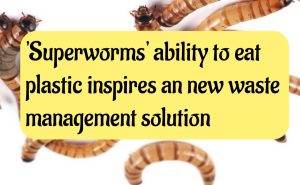
Scientists from Nanyang Technological University in Singapore are harnessing the remarkable abilities of superworms to develop a novel solution for negotiating plastic pollution.
These darkling beetle larvae, known for their taste as snacks in some cultures, hold a secret weapon in their gut: a unique microbiome capable of breaking down certain plastics.
The “Super Gut” Project:
- Researchers are creating an “artificial super gut” by replicating the superworm’s gut environment. This eliminates the need for the worms themselves, focusing on boosting the beneficial microbes and building a system for efficient plastic breakdown.
Superworm Diets and the Power of Microbes:
- Superworms were fed different types of common plastics – high-density polyethylene (HDPE), polypropylene (PP), and polystyrene (PS) – for a month. The gut microbes of these plastic-fed worms were then isolated and cultured to create the ” artificial super gut.”
Impressive Results:
- The lab-grown guts showed a significant increase in plastic-degrading bacteria compared to the control group. These bacteria performed even better when exposed to the specific plastic they were previously “fed” to the superworms.
Future of the “Super Gut”:
- While still in its early stages, the researchers believe this technique can be scaled up and adapted to treat various materials, offering a more diverse approach to plastic waste management.
Sustainability and Replication:
- The study emphasizes the method’s stability and replicability, paving the way for long-term solutions. By manipulating the gut microbiome, researchers can increase the abundance of plastic-degrading bacteria, making this method potentially scalable and sustainable.
The “super gut” holds immense potential as a game-changer in plastic waste management. By harnessing the power of superworms and mimicking their unique gut function, researchers are offering a promising solution for a cleaner and more sustainable future.
Views: 13